Grief often leaves people searching for the right words, especially when trying to thank those who showed support during a painful time. Knowing what to write on a funeral thank you card can feel overwhelming because emotions are still fresh and every message feels deeply personal.
After a loss, even simple gratitude can feel difficult to express. Yet a funeral thank you card becomes a meaningful way to acknowledge kindness, comfort, and presence during one of life’s hardest moments. This guide is designed to help you find sincere, respectful, and heartfelt wording that feels natural and comforting.
Understanding what to write is not about perfect phrases. It is about expressing genuine appreciation in a way that honors both your loved one and the people who stood by you.
Understanding the Purpose of a Funeral Thank You Card
A funeral thank you card is not just a formality. It is a personal expression of gratitude during a time when support matters more than ever. It helps acknowledge those who offered sympathy, attended services, sent flowers, or provided emotional comfort.
Why these messages matter emotionally
When someone is grieving, support can feel like a lifeline. A thoughtful thank you card helps recognize that care. It also gives the sender a sense of closure and connection, even in sorrow.
People often remember kindness during difficult times for years. A simple message of thanks can become something deeply meaningful for both the sender and the recipient.
What makes these cards different from regular thank you notes
Unlike everyday thank you notes, funeral messages carry emotional depth. They are not about gifts or favors alone. They are about presence, compassion, and shared grief.
This is why what to write on a funeral thank you card requires sensitivity, honesty, and warmth rather than formal or overly polished language.
7 Heartfelt Ideas for What to Write on a Funeral Thank You Card
Below are seven meaningful approaches you can use depending on your relationship with the recipient and the type of support you received.
1. Simple Gratitude for Presence and Support
Sometimes the most powerful message is the simplest one. If someone attended the funeral or visitation, their presence alone can mean everything.
Example message idea
You might write:
“We are deeply grateful for your presence during this difficult time. Your support brought comfort and strength to our family.”
Why this works
This approach focuses on presence, which is often more meaningful than words. People often underestimate how much their attendance helps grieving families feel less alone.
When to use it
Use this when the person attended the service or visited the family home during mourning.
2. Appreciation for Emotional Comfort
Many people offer emotional support through calls, messages, or quiet companionship. These acts are small but deeply impactful.
Example message idea
“Your kindness and comforting words helped us more than you know during this time of loss. We are truly thankful for your support.”
Why this works
Grief can feel isolating. Acknowledging emotional comfort shows that their support was noticed and valued.
When to use it
Use this for friends, relatives, or neighbors who checked in regularly or provided emotional reassurance.
3. Thank You for Flowers, Gifts, or Donations
Flowers, memorial donations, and thoughtful gestures are common ways people show sympathy.
Example message idea
“Thank you for your beautiful flowers and thoughtful gesture. Your kindness brought light and comfort to our family during this difficult time.”
Why this works
It recognizes both the gesture and the emotion behind it. It also shows appreciation without needing overly elaborate wording.
When to use it
Use this when someone sends flowers, makes a donation, or offers a tangible expression of sympathy.
4. Gratitude for Help During the Funeral Arrangements
Some people go beyond condolences and actively help with arrangements, meals, or logistics.
Example message idea
“We are deeply grateful for your help and support in arranging the service. Your kindness made a difficult time more manageable for our family.”
Why this works
Funeral planning can be overwhelming. Acknowledging practical help shows deep appreciation for real, meaningful assistance.
When to use it
Use this for close friends or family members who helped organize or manage funeral details.
5. Appreciation for Long-Term Support
Some people continue offering support even after the funeral is over.
Example message idea
“Your continued support and care mean so much to us. We are grateful to have you by our side as we navigate this loss.”
Why this works
Grief does not end with the funeral. Recognizing ongoing support shows emotional awareness and gratitude for lasting relationships.
When to use it
Use this for people who continue checking in weeks after the service.
6. Personalized Message for Close Friends or Family
For people very close to the deceased or family, a more personal tone is appropriate.
Example message idea
“Your love for our dear one and your support for our family have meant everything to us. We will always remember your kindness.”
Why this works
It acknowledges the shared bond and emotional connection between the person and the deceased.
When to use it
Use this for close relatives, lifelong friends, or anyone deeply connected to the loved one.
7. Faith-Based or Spiritual Gratitude (If Appropriate)
For families who follow spiritual or religious traditions, faith-based messages can bring comfort.
Example message idea
“We are grateful for your prayers and support. May peace and strength be with you as it has been with us during this time.”
Why this works
Spiritual language can offer comfort and shared meaning during grief, especially in faith-centered communities.
When to use it
Use this when the recipient and family share similar spiritual or religious beliefs.
Practical Guidance for Writing Funeral Thank You Cards
Understanding what to write on a funeral thank you card is easier when you follow a few simple principles. These guidelines help ensure your message feels sincere and appropriate.
Keep the Message Simple and Honest
Why simplicity matters
Grief can make writing feel emotionally heavy. Simple sentences often feel more genuine than complex wording.
A short, sincere message is always better than a long, forced one.
Example approach
Instead of writing something elaborate, focus on clarity:
“Thank you for your kindness and support during this difficult time.”
Use the Name of the Recipient When Possible
Why personalization helps
Adding a name makes the message feel more direct and meaningful.
It shows that you took a moment to acknowledge the person individually, which strengthens emotional connection.
Acknowledge Specific Actions
Why detail matters
Mentioning what the person did makes the message more heartfelt. It shows awareness of their effort.
Examples of actions to mention
- Attending the service
- Sending flowers
- Offering meals
- Making donations
- Providing emotional support
Don’t Feel Pressured to Be Perfect
Emotional reality
There is no perfect way to write during grief. The goal is sincerity, not perfection.
Even short, handwritten notes carry deep meaning when written from the heart.
Timing Matters Less Than Sincerity
Practical understanding
While thank you cards are often sent within weeks of the funeral, there is no strict deadline. People understand grief takes time.
What matters most is that the message is genuine, not rushed.
Common Mistakes to Avoid When Writing Funeral Thank You Cards
Even with good intentions, it is easy to feel unsure about tone and wording. Knowing what to avoid can be just as helpful as knowing what to write.
Avoid overly long or complicated messages
Grief already makes communication emotionally heavy. Long paragraphs or overly formal language can feel distant or forced. A simple, sincere message is more powerful than a complex one.
Avoid making the message about obligation
A funeral thank you card should never feel like a duty or checklist. Phrases that sound mechanical or repetitive can take away from the emotional sincerity. Focus on genuine appreciation rather than formality.
Avoid comparing support
Each person’s support is different, and it is best not to rank or compare kindness. Every gesture, whether big or small, carries its own meaning.
Avoid minimizing your grief too much
While gratitude is the focus, it is also okay to acknowledge loss gently. Completely ignoring the emotional context can sometimes make the message feel less authentic.
Real-Life Examples You Can Adapt
Here are a few adaptable templates that reflect different situations.
General message
“We are deeply grateful for your support and kindness during our time of loss. Your presence meant so much to our family.”
For emotional support
“Thank you for your comforting words and care. Your support has helped us more than we can express.”
For close friends
“We will always remember your kindness and love for our family. Thank you for standing by us during this difficult time.”
Sample Funeral Thank You Messages for Different Situations
Sometimes the hardest part of understanding what to write on a funeral thank you card is starting the sentence. These simple examples can help you get started and adapt them to your situation.
For attendance at the funeral
“We sincerely appreciate your presence at the service. Your support brought comfort to our family during a very difficult time.”
For sympathy messages or calls
“Thank you for your kind words and thoughtful messages. Your support has meant so much to us as we navigate this loss.”
For flowers or donations
“We are deeply grateful for your beautiful flowers and generous gesture. Your kindness brought peace and comfort to our hearts.”
For close friends and family support
“Your love and support during this time have meant everything to us. We are truly grateful to have you in our lives.”
Emotional Value and Reader Benefit
Writing a funeral thank you card is not only about etiquette. It is also part of healing. Expressing gratitude helps families reflect on the support they received and recognize that they were not alone.
How it helps emotionally
- Brings a sense of closure
- Encourages reflection on positive support
- Strengthens meaningful relationships
- Helps process grief gently
How it helps practically
- Ensures supporters feel appreciated
- Maintains respectful social connection
- Preserves dignity during a sensitive time
Even when words feel difficult, the act of writing itself can be comforting.
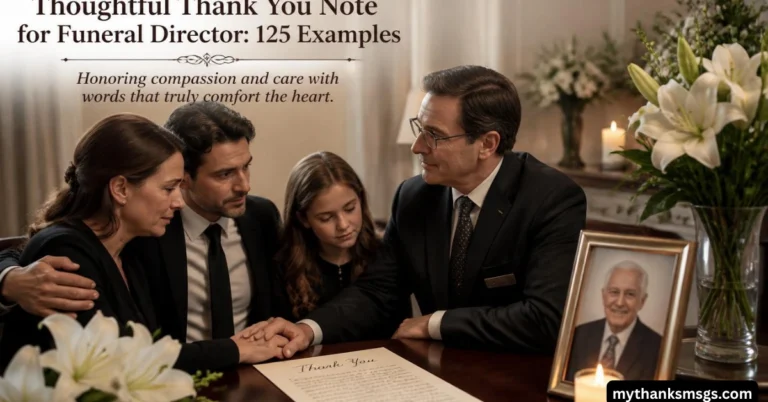
You can also read: Thoughtful Thank You Note for Funeral Director: 125 Examples
Conclusion
Understanding what to write on a funeral thank you card is ultimately about expressing sincere gratitude during one of life’s most emotional moments. There is no single correct way to write these messages, only heartfelt ways that reflect your truth.
Whether you choose a simple thank you, a personalized message, or a spiritual expression of gratitude, what matters most is honesty and warmth. The people receiving your words will not expect perfection—they will appreciate sincerity.
In moments of loss, small gestures carry deep meaning. A thoughtful thank you card becomes more than a message; it becomes a quiet acknowledgment of love, support, and shared humanity.
FAQs:
What to say on a thank you card after a funeral?
When writing a funeral thank you card, keep your message simple, sincere, and heartfelt. Mention the person’s support, kindness, or presence during your time of loss. A short expression of gratitude is enough to show appreciation.
What to write in a funeral thank you card for money?
In a funeral thank you card for money, express appreciation for the thoughtful donation and support. You can mention how the contribution will help with funeral expenses or memorial needs. Keep the tone respectful and warm without going into too much detail.
What to write in a thank you card for a funeral plant?
For a funeral plant, thank the sender for their thoughtful and comforting gift. You can mention how the plant brings peace, beauty, or lasting memory of your loved one. A simple message of gratitude is both meaningful and appropriate.
How do you end a thank you card for a funeral?
End a funeral thank you card with a warm closing such as “With heartfelt thanks,” “Sincerely,” or “With gratitude.” You can also add a personal touch like your family name or a collective sign-off. Keep the ending gentle and respectful.
Should you send thank you cards after a funeral?
Yes, sending thank you cards after a funeral is a thoughtful way to acknowledge support and kindness. It helps you express gratitude to those who offered sympathy, attended the service, or sent gifts. While not required, it is a meaningful gesture of appreciation.
How do you write a short and sweet thank you card?
To write a short and sweet funeral thank you card, focus on one clear message of gratitude. Mention the support you received and keep your wording simple and sincere. A few heartfelt sentences are enough to make your appreciation feel genuine.